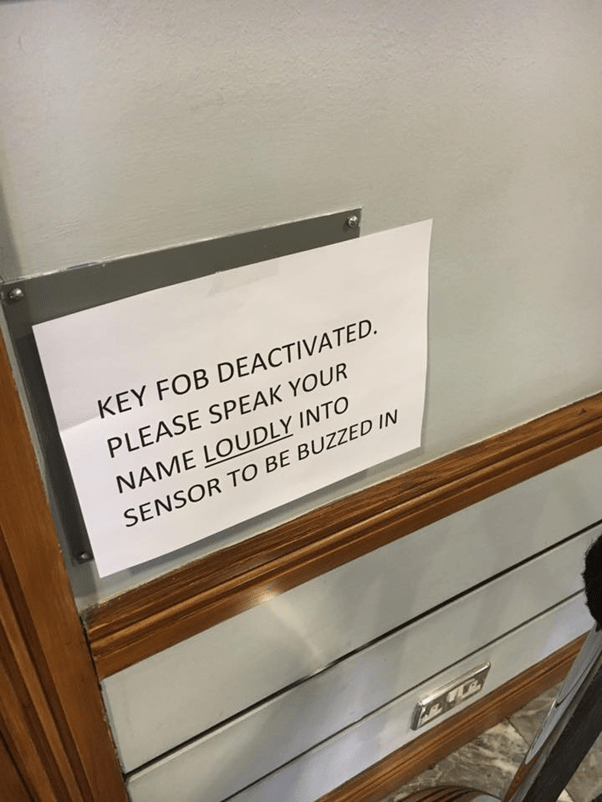
Caught three people out on April Fool’s Day. One quite spectacularly. Not that I’m naming names, eh Brian?
Caught three people out on April Fool’s Day. One quite spectacularly. Not that I’m naming names, eh Brian?
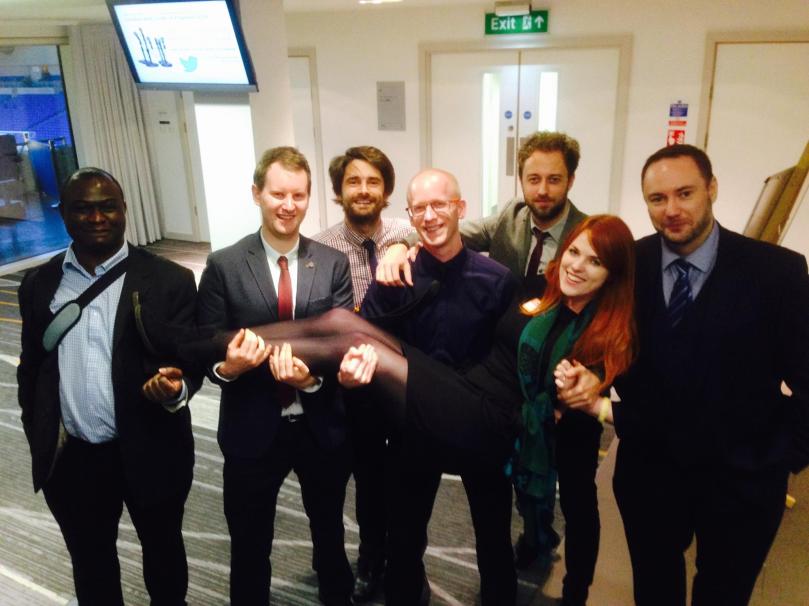
I lost a reporter recently – careless, I know. And I lost a good one. Twice award-nominated Jo Gilbert.
When young Jo joined the paper as a trainee, I used to tinker with her work a lot. Tinkering is a big part of editing copy.
Editors tinker for a lot of reasons.

I started off tinkering with Jo’s copy quite a lot. Then after a few months, she started to say, ‘I knew you were going to change my story like that’. To which I’d always reply, ‘so why didn’t you change it yourself?’
So she started changing it herself.
Towards the end of her time, there was very little I had to do to Jo’s copy. We might have different styles, but generally the way she was writing stories was the way I’d write them too.
At that stage there’s usually three ways for a now senior reporter working on a weekly paper to go. They get promoted. They go to a national. Or they take a sideways step into the wonderful world of PR.
I may never know what attracted Jo to the well paid, comparatively stress-free job she took, where out-of-hours overtime involves wine tasting, quite possibly abroad.
But I’ll happily raise a glass to her new career.
The future is bright, but the future is digital. And it’s proving to be a tricky transition for many of those involved.
Local paper newsrooms up and down the country are laying off staff. Respected titles which once boasted in-house subbing teams ready to berate cub reporters, on site IT support staff, a fleet of notebook-clutching news reporters, and staff photographers on call whenever they were needed -have now made way for subs who reporters never see, largely telephone-based IT support abroad, one reporter or two reporters staving off the day when all they do is content harvest and a freelance photographer as and when the budget will stretch to it.
Something has to give. Because some of the remaining staff that are keeping these papers going are working extraordinary hours to keep them afloat and put out a quality product – or at least one which doesn’t get anyone sued. They do it with skill, and passion, and dedication. They do it because they love what they do. But they won’t do it forever.
But then, they won’t need to. Many are leaving. And sooner or later, printed papers will, no pun whatsoever intended, fold.
It’s a shame but no profession has the right to exist and every business has to make money. And for the moment, they way that local papers are staying afloat is my minimising costs and maximising advertising revenue.
And they are turning to the web- because that’s where there readers are.
Does it matter? It depends how you like your news.
Sure, you can rely on social media, or look at a hyper-local website.
But in the case of the former, you can’t really trust what you’re reading. A few years ago now, as there were riots taking place in the capital, there were reports on Twitter that the violence had spread to sunny Redhill where at the time, I was senior reporter at the Surrey Mirror. As each and every report came in – McDonalds was on fire, there was fighting in the park – we dispatched our most junior member of staff to report back to us. And it was all utter nonsense.
And in the case of the latter – you want to be sure you know you’re not just reading advertising puff all the time with an endless procession of cut and paste press releases which are dutifully put up, and steadfastly unquestioned. I’m not keen to read well spun press releases from companies and councils (for they, at least, have money to spend on the people who write for them). There’s no point in having the potatoes if you never get the steak.
But what if you want proper news, brought to you by qualified journalists, not frightened to ask the difficult questions, shrewd enough to check the truth of what they are being told and – well – doing actual journalism.
Well, then someone will have to pay for it.
It could be advertising – more on that elsewhere on this blog. The more obtrusive the adverts, the more cash they generate, but the more the public protests and ultimately, goes elsewhere. Or you can put the site behind a paywall. Recent experiments with that have met with mixed success.
I’d love to finish this post with a clever answer. I’m afraid don’t have one.

“Pedo lolly pop man”.
That was the headline on the stick (sidebar) of one of the papers my old boss used to edit. The picture in question was accompanied by a photograph of the alleged criminal in question. Just another front page, you might think. But not that day.
There was two problems. The first? It was a headline that the facts didn’t support. It could have cost Trinity Mirror a lot of money, but more expensively, it could have cost someone their job – and an innocent man a lot more.
The page had been laid out by a sub editor working in another office. The phonecall that followed brought the office to a standstill:
“What the f*** are you doing? He hasn’t been convicted yet! This is a live court case! This could cost someone their job. Me!”
And the second problem? The editor raised his voice. “And furthermore. ..”
“And furthermore, LOLLIPOP IS ONE WORD!”


Have you ever wondered what an editor does?
There was a time, not so very long ago, when the job of a newspaper editor was reasonably straightforward.
The editor edited the copy written by reporters, and sent that copy to pages for subs to lay out on the page. They took charge at news meetings and were full of ideas and enthusiasm to inspire their (usually) younger charges. They had time to be creative, to liaise with the graphic designers, and photographers and to get their paper in the best possible shape.
Property pages were dealt with by a property editor. Entertainment pages had an entertainment editor. Proofing of pages was done by subs. And there was a web editor responsible for putting stories up online.
How times have changed!
I love my job. But its breadth is far greater than the job I had when I first took on the role.
It’s tricky to write down exactly what my job now entails. But I’m going to give it a go. I may, in the months after this post goes live, come back and add to it as I remember all I have missed!
So.. this is some of what I do.
A little digression on that final point, and a couple of mentions my paper got, and chats I had with the guys at journalism website HoldTheFrontPage
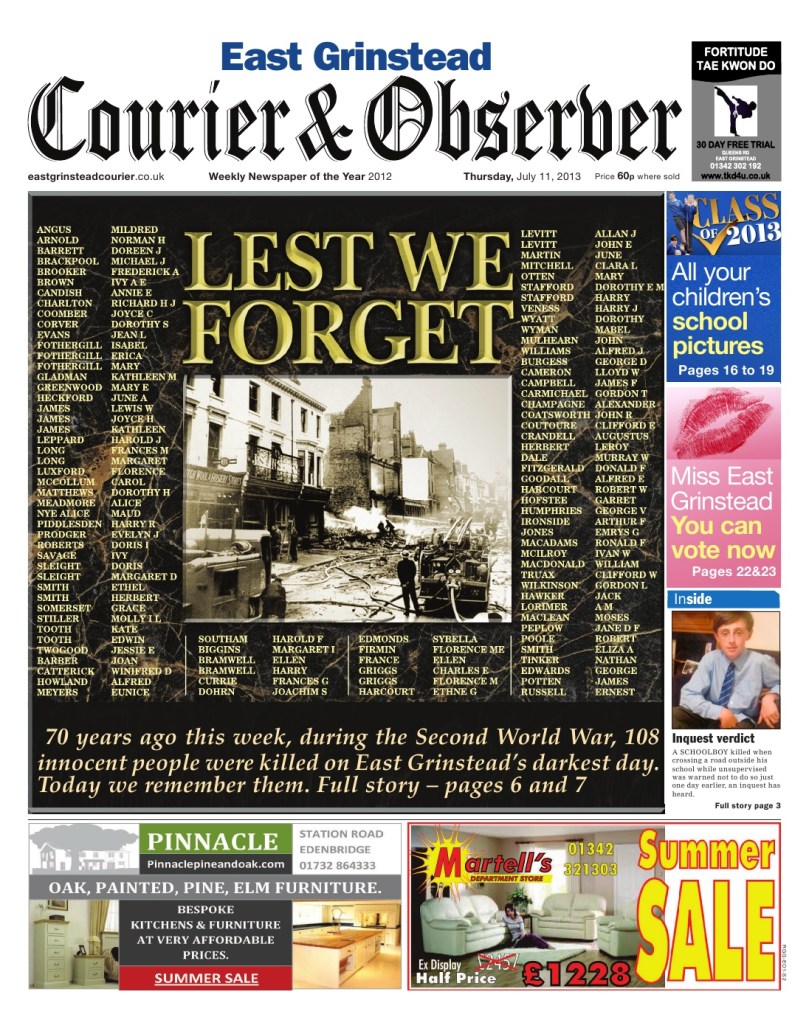
There was praise for Weekly brings back 70-year-old masthead for special edition.
That’s this:
And within a week of that, there was global reaction to ‘Stuck bottom’ NIB becomes splash after global interest.
That’s this:
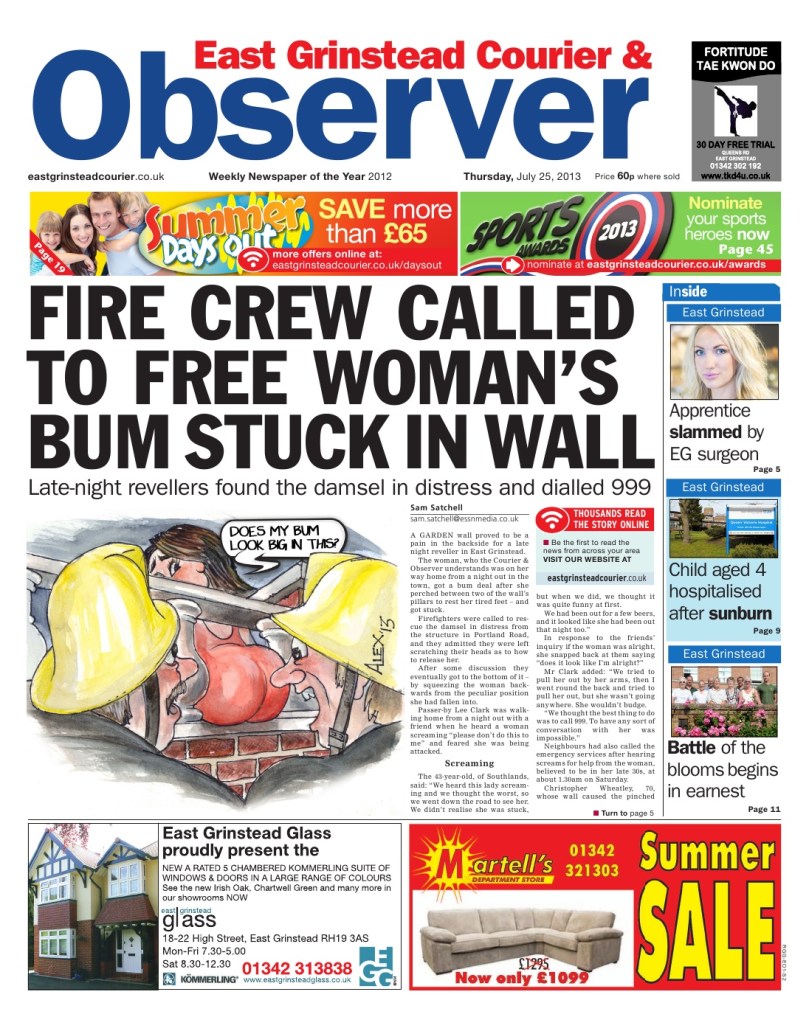
And while some of you may be keen to praise the former and knock the latter – which I understand completely – which do you imagine garnered the most readers?
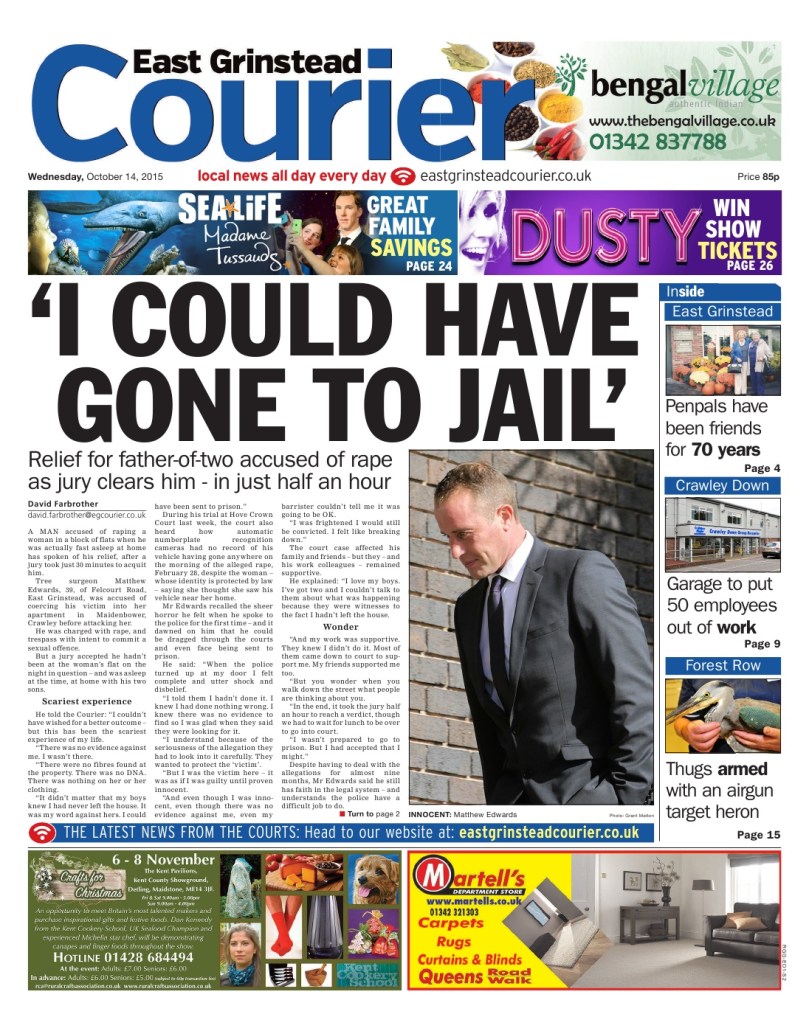 I’ve written, and edited, lots of front pages down the years.
You can find a selection of pages I’ve written here, and pages edited on my watch here.

Newspaper writing is surprisingly formulaic. You don’t have to be a great writer to be a good journalist. It helps, but when you are starting out, you have to dial back your ambition sometimes. Write ‘by the numbers’.
So I have a Noddy, small guide for trainee reporters. It’s stuff they ought to know, generally do know, but don’t always do. They take liberties with the way news is generally written, and unless they are really goo, it’s often a leap too far – or at least, they are leaping too soon.
This is it:
1. There needs to be an information download in the first two or three paragraphs.
· Who are we talking about
· Where did this happen
· When did it happen
· Why did it happen
· How did it happen
· What happened
A thing happened in a place to a man.
This is who he is, when he did it, how he did it and why.
2. Your best quote – out of order if need be, comes next. It should be at least few sentences long ideally, not just one – more if it reads better.
John Smith, age here, job title here, of street name here, said: “Long quote goes here”.
3. The rest of the story flows next, generally quoting at least one other person.
4. Are we having a go at anyone? They need a right of reply. Is there an alternate view? Does it need to be put? Are we libelling anyone? Is there a defence (talk to editor!). Are we sure any facts we’re printing are true?
Putting together a newspaper is a bit like putting together a jigsaw. There’s the main piece (the lead), a couple of longer fillers (downpages) and a column of short stories down one side (nibs) generally. An average page might need a lead a downpage or two, and a column of three or four nibs.
Size guide
Nib – up to 150 / 200 words
Downpage – 200 – 350 words. Generally should have a photo.
Lead – 350 words and up, generally around 400/450, MUST have a photo. Before writing a lead ask, what photo am I sending with this? If there isn’t a photo, you may not have a lead.
If your lead is long, think -can I split part off and do a breakout?
Always ask – is there a “value added piece” I can do? A fact box or similar?

My name is David Farbrother, and I’m an award-nominated journalist living near the south coast of England with my wife, teenage daughter and four cats. I’m still able to say I am in my early forties (just!) and I’ve decided to chip out a tiny corner of the internet to share my thoughts in the belief that someone – friends, fellow journalists, curious would-be-journos and quite probably prospective employers – may want to read them. This is me, uncensored and unfiltered!
As I write this, I’m the news editor on the news desk of a couple of Sussex-based newspapers.
I love my job. There’s too much of it – the only way to make local newspapers work is for the scant teams putting them together to work extraordinary hours. But I love it. A wise man once said, “Choose a job you like, and you’ll never have to work a day in your life”. He was half right, but I suspect had never experienced a deadline day.
The times, are however, a changin’. I’m in a profession which is – at a local level at least, either going through its death throws or – hopefully – shedding its skin (and by skin, I mean jobs) to emerge more lithe, healthier and profitable, and almost certainly digital.
Just 10 years ago, there were more reporters, and banks of sub-editors sat just rows away from them making the jigsaw from the pieces the former had carefully crafted for the latter. And there was a man, in a suit, who sat in the corner and who handled IT problems.
Those Halcyon days have gone, and I wish I had seen more of them.
These days there are less reporters. The last of the old-school cohort of journalists who remember when the most interactive way of finding out about news was turning a page rather than hitting a red button are retiring. The sub editors have been relocated to somewhere so far from the papers they design it would require a train trip or two for the journalists who work with them to meet them and even then, while they would know their voices they wouldn’t recognise their faces. And the IT man has been replaced by a bank of pleasant, but distant people overseas.
But the papers survive, thanks to the remarkable talents and hard graft of a new breed of switched-on, and (at times begrudgingly) digital first journalists. I gave a talk, a couple of months ago, about how to put together a paper to a group of Rotarians. I asked them how many news journalists they thought it took to put their local paper together. Their first guess was ten. The answer, currently, in a good week, is two-and-a-half. Most weeks, it’s less.
The work those talented 2.5 reporters do is remarkable. You simply couldn’t do the job without a passion, a dedication, and a joy in what you do. If you are looking for the finer things in life which money can buy I can’t – now more than ever – recommend becoming a journalist. And yet it’s hard for me to imagine doing anything else myself. Over the course of the coming blog posts, I’ll try to shed some light into why, and the trials and tribulations of a jobbing journo.
For the record, this blog has nothing whatsoever to do with whatever post I hold when you read it and the thoughts are, quite naturally, all my own. What would be the point of anything else?
You can get in touch on the form below.

 Musings of a jobbing journo