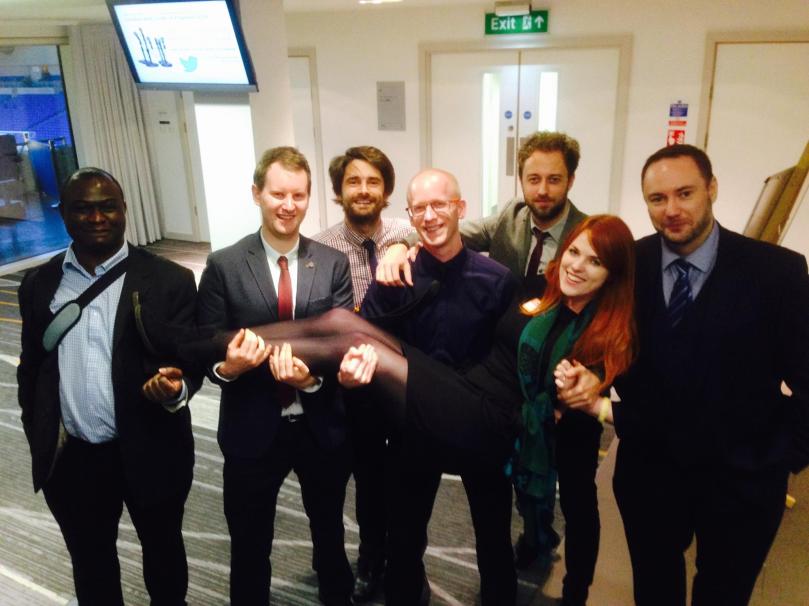
I lost a reporter recently – careless, I know. And I lost a good one. Twice award-nominated Jo Gilbert.
When young Jo joined the paper as a trainee, I used to tinker with her work a lot. Tinkering is a big part of editing copy.
Editors tinker for a lot of reasons.
- We tinker to make introductions “sexy”. Intros need to be short and snappy, they need to engage the reader who has a notoriously short attention span, and who may well be conditioned to press a red button for their information download in one bite-sized chunk. As any good journalism college will tell you – and probably most of the bad ones too, the who, where, when, why, what and how of a story should be front and centre at the start of almost all copy. Whenever we get a trainee in or someone comes in on work experience, I ask them to pick up a copy of my paper, open it at a random page and tick off each of those essential pieces of information in the first few paragraphs. If they can’t, it may well be my fault… or there may just be a reason. The better you get at repeating the formula, the greater a liberty you can, occasionally, take.
- We tinker to keep things legal. Contrary to popular opinion, we’re meticulously careful on local papers to get things right. We try not to publish rumour and supposition. We check our facts – and if they can’t be checked in time for our 24-7 news hungry audience, we say what we know is a fact and who we’ve contacted to find out more. In a world of rolling news and live blogging, keeping an audience with us as the news is breaking – is a great way to do this.
- We tinker to make sure the angle of the story is right. There’s always more than one way to tell a story. So we seize on what makes it news above all else. She’s been waiting for a new bathroom for how long? Right. But she hasn’t washed in almost a year? Aha!
- We tinker to check grammar, punctuation and spelling. We don’t always get it right – the speed at which we work makes that impossible. But luckily if we make a slight error, there’s always a helpful soul
- And we tinker to make sure the story reads well and complies with house style.

I started off tinkering with Jo’s copy quite a lot. Then after a few months, she started to say, ‘I knew you were going to change my story like that’. To which I’d always reply, ‘so why didn’t you change it yourself?’
So she started changing it herself.
Towards the end of her time, there was very little I had to do to Jo’s copy. We might have different styles, but generally the way she was writing stories was the way I’d write them too.
At that stage there’s usually three ways for a now senior reporter working on a weekly paper to go. They get promoted. They go to a national. Or they take a sideways step into the wonderful world of PR.
I may never know what attracted Jo to the well paid, comparatively stress-free job she took, where out-of-hours overtime involves wine tasting, quite possibly abroad.
But I’ll happily raise a glass to her new career.
 Musings of a jobbing journo